
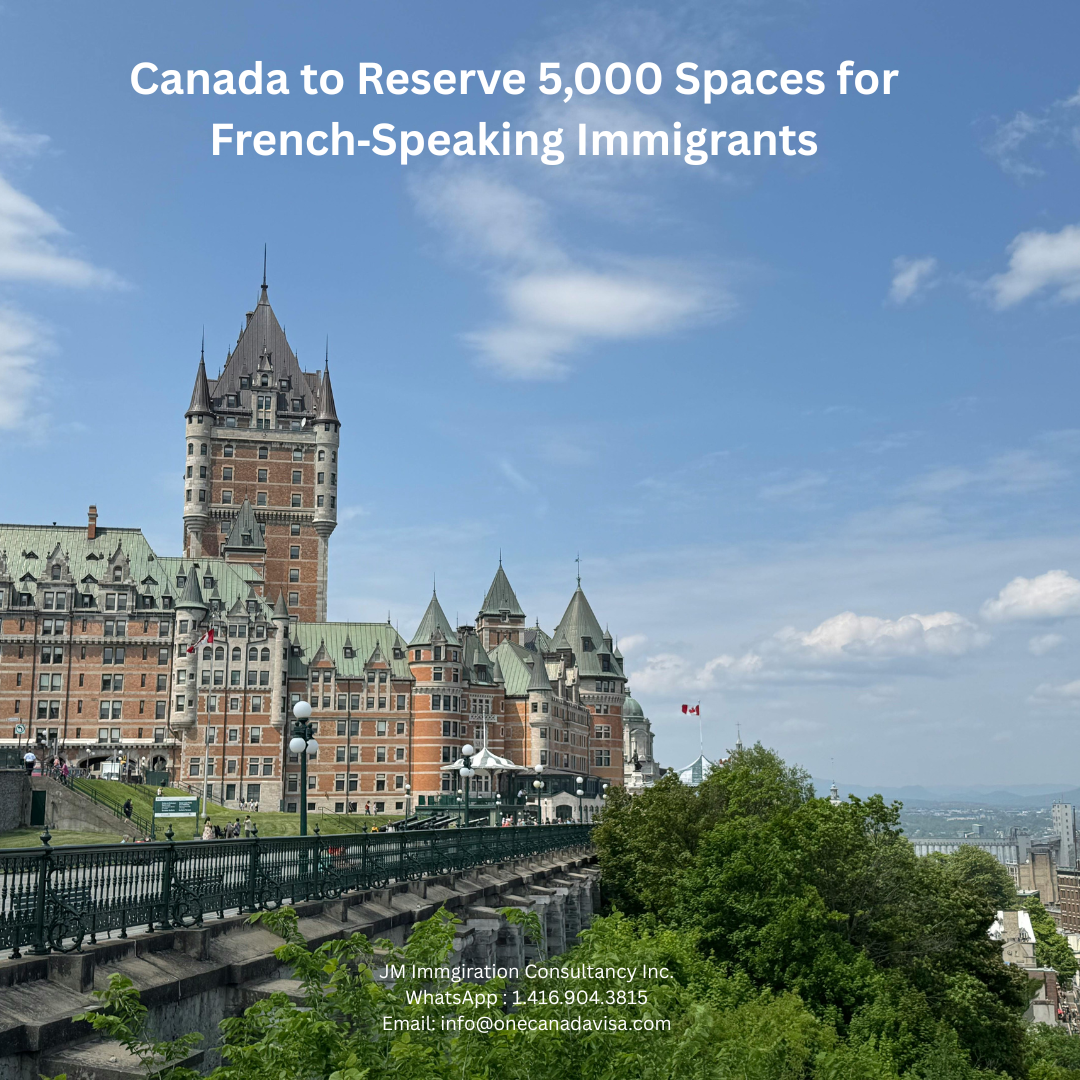
Canada to Reserve 5,000 Federal Selection Spaces for French‑Speaking Immigrants
Strengthening Francophone and Acadian Communities Across Canada
Francophone and Acadian minority communities outside Quebec play a vital role in Canada’s cultural identity, economic growth, and the long‑term vitality of the French language. On January 19, 2026, a federal announcement in Moncton, New Brunswick confirmed a major new initiative to support these communities: starting in 2026, Canada will reserve 5,000 federal selection spaces for French‑speaking immigrants.
This marks a significant step in Canada’s long‑term strategy to increase Francophone immigration and strengthen French‑speaking communities nationwide.
Why This Initiative Matters
Francophone immigration is essential for:
• Addressing labour shortages across provinces and territories
• Supporting the growth of bilingual and French‑language services
• Strengthening the demographic weight of Francophone and Acadian communities
• Preserving and promoting Canada’s linguistic duality
The federal government has emphasized that French‑speaking newcomers contribute meaningfully to the workforce, local economies, and cultural vitality across the country.
What’s Changing in 2026?
5,000 Reserved Federal Selection Spaces
Beginning in 2026, the Government of Canada will set aside 5,000 federal selection spaces specifically for provinces and territories to nominate French‑speaking immigrants.
These spaces are:
• In addition to existing Provincial Nominee Program (PNP) allocations
• Designed to help provinces and territories attract more Francophone and bilingual talent
• Part of a broader strategy to reach 12% French‑speaking permanent residents outside Quebec by 2029
This initiative gives provinces and territories more flexibility and capacity to select French‑speaking candidates who can support local labour markets and community development.
Canada Continues to Exceed Francophone Immigration Targets
The announcement also highlighted Canada’s ongoing success in meeting and surpassing its Francophone immigration goals:
• In 2025, Canada admitted about 8.9% French‑speaking permanent residents outside Quebec, surpassing its target of 8.5%.
• Targets will continue to rise under the 2026–2028 Immigration Levels Plan, reaching:
• 9% in 2026
• 9.5% in 2027
• 10.5% in 2028
These results reflect strong collaboration between IRCC, provinces, territories, and Francophone community organizations.
Programs Supporting Francophone Immigration
Canada’s strategy includes multiple tools and pathways that make it easier for French‑speaking newcomers to immigrate and settle successfully:
• Express Entry – French‑Language Proficiency Category
Prioritizes candidates with strong French skills.
• Francophone Mobility Program
Helps employers hire French‑speaking temporary workers outside Quebec.
• Welcoming Francophone Communities Initiative
Expands settlement capacity and community support across Canada.
These programs work together to attract global Francophone talent and strengthen local communities.
What This Means for Applicants and Provinces
For French‑Speaking Applicants
• More nomination opportunities through provincial programs
• Increased chances of receiving invitations due to dedicated selection spaces
• Stronger support networks in Francophone communities across Canada
For Provinces and Territories
• Greater flexibility to meet labour needs
• Ability to design or expand French‑focused immigration streams
• More tools to support the growth of bilingual workforces
Canada’s decision to reserve 5,000 federal selection spaces for French‑speaking immigrants is a landmark move that reinforces the country’s commitment to linguistic diversity and community vitality. By expanding pathways for Francophone newcomers, Canada is investing in its cultural heritage, economic resilience, and the future of French‑speaking communities nationwide.


