
Canada’s Immigration System Now Prioritizes These Applicants—Even Over Higher Scorers
Canada’s immigration system is evolving—and it’s no longer just about who has the highest CRS score. A recent Toronto Star article (Jan 10, 2026) reveals a strategic shift in how Immigration, Refugees and Citizenship Canada (IRCC) select candidates, favoring applicants with specific work experience and backgrounds that align with national priorities, even if they score lower than others in the Express Entry pool.
Who Is Being Prioritized in 2026?
IRCC has increasingly used category-based Express Entry draws to target applicants with:
• French-language proficiency
• Work experience in healthcare, STEM, trades, transport, and agriculture
• Canadian work or study experience
• Provinces’ labor market alignment (via PNPs)
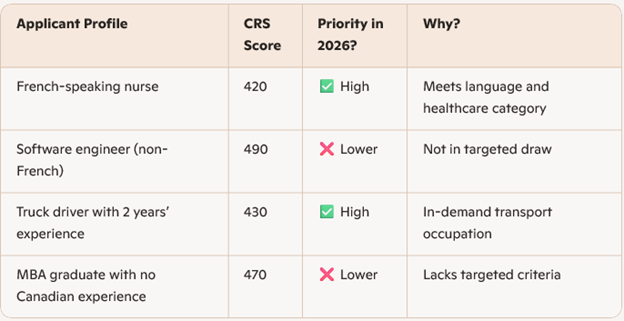
This means a nurse with a CRS score of 420 and French skills may be invited before a software engineer with a score of 490 but no French or targeted occupation.
Why Is This Happening?
Canada’s immigration strategy is now focused on filling critical labor shortages and supporting economic growth in underserved sectors. The government has signaled that economic alignment and regional needs outweigh pure point totals.
This shift is driven by:
• Aging population and labor gaps in healthcare, trades, and agriculture
• Francophone immigration targets outside Quebec
• Provincial Nominee Program (PNP) influence, which allows provinces to nominate candidates based on local demand
What This Means for Applicants
How to Improve Your Chances in 2026
1. Target Category-Based Draws: Gain experience in high-demand fields like healthcare, trades, or STEM.
2. Learn French: Even basic proficiency can open doors in Francophone-targeted draws.
3. Get Canadian Experience: Study or work in Canada to boost eligibility and adaptability points.
4. Apply Through PNPs: Tailor your application to provinces with labor shortages in your field.
5. Stay Updated: Follow IRCC’s draw trends and adapt your strategy accordingly.
Canada’s immigration system is no longer a numbers game. It’s a strategic talent acquisition model—and understanding its evolving priorities is key to success. At JM Immigration Consultancy, we help clients navigate these shifts with personalized strategies that align with their goals and Canada’s needs.
Need help tailoring your immigration plan to 2026’s new priorities? Book a consultation or try our Free Assessment Tool (onecanadavisa.com) today.


